
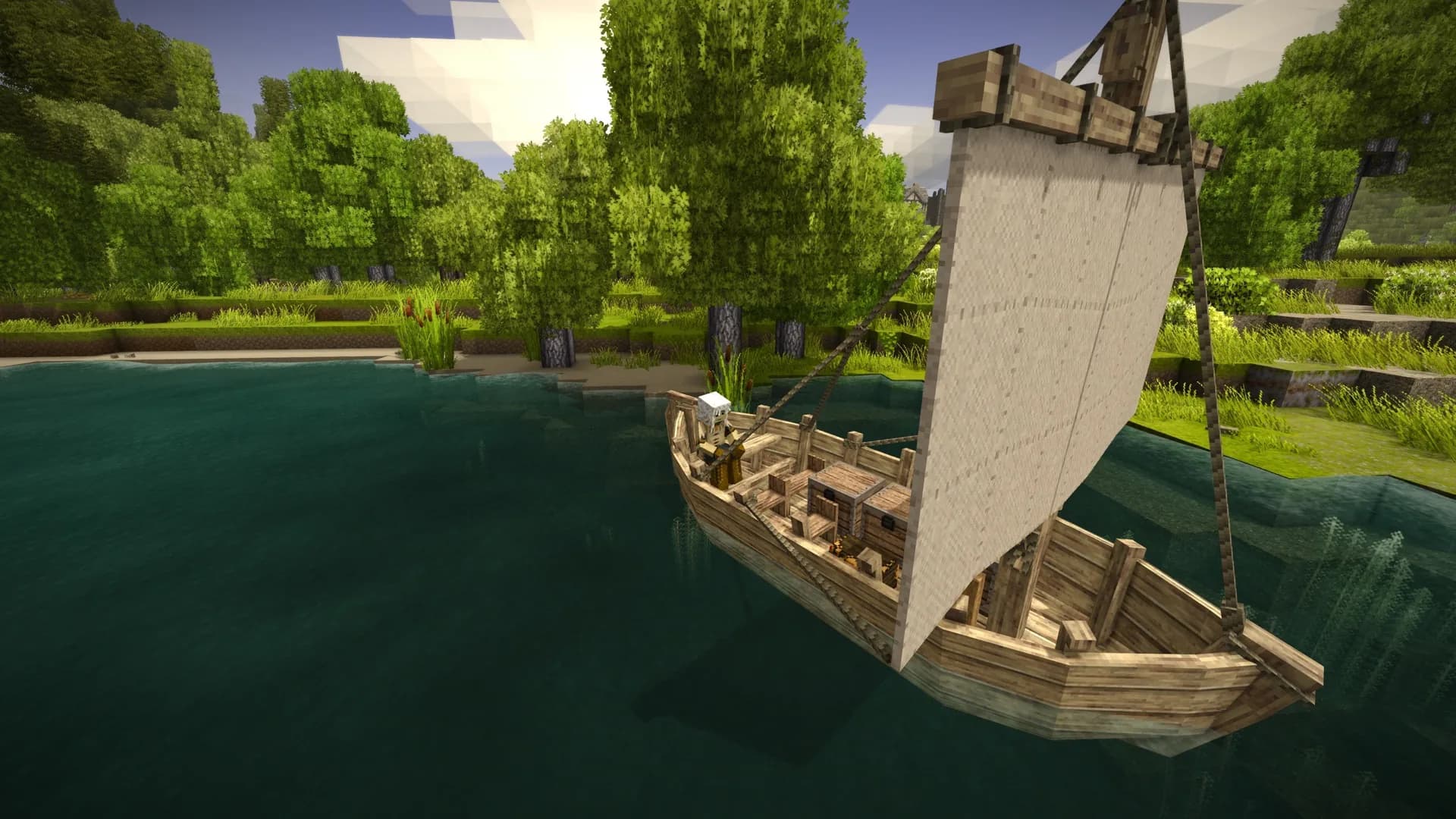
What kind of game is Vintage Story?
The official description calls Vintage Story an “uncompromising wilderness survival sandbox” inspired by eldritch horror. That is a useful summary, but the game’s identity becomes clearer when its systems are viewed together. You begin with basic gathering and stone tools, then learn pottery, food preservation, farming, metallurgy, mechanical power, and more advanced materials. Progress is physical: many items are shaped, knapped, cast, forged, assembled, or stored through hands-on processes rather than instant menu recipes.
The world is procedurally generated and simulated across seasons. Weather, temperature, soil fertility, geological layers, food spoilage, animal behavior, and changing daylight all affect practical decisions. A good shelter is not merely decorative. Its location influences access to fuel, food, clay, ore, water, and safe travel routes.
Current status at a glance
| Question | Verified answer |
|---|---|
| Current stable version | 1.22.7 |
| Development status | Early Access and actively developed |
| Is it fully playable? | Yes; the official site describes it as fully playable |
| Desktop platforms | Windows, macOS, and Linux |
| Steam availability | Not on Steam |
| Developer | Anego Studios SIA |
| Publisher | No separate publisher; the official site describes the project as independent |
| First paid Early Access release | September 27, 2016, as version 1.0.0 |
What makes it different?
Vintage Story is less interested in giving you a checklist than in making survival systems interact. A cold season can expose weak food planning. A promising mine can become dangerous when temporal instability or hostile creatures complicate the return trip. A distant expedition may be worthwhile because local geology does not provide the material you need. Even ordinary work—storing grain, preserving meat, making charcoal, or improving a workshop—feeds into long-term survival.
Building is equally important. The voxel world supports detailed construction, including extensive block variation and microblock editing. A functional settlement can gradually become a carefully designed home, workshop, farm, cellar, mine network, and mechanical production site. Multiplayer turns that workload into a natural division of labor, while the official mod ecosystem can change or expand almost every part of the game.
A sensible first-session plan
- Confirm that you installed the recommended stable build, currently 1.22.7.
- Create a standard survival world before changing many advanced settings.
- Gather surface resources and make your first stone tools.
- Secure food, light, and a temporary shelter before treating exploration as the main objective.
- Mark useful deposits and landmarks instead of relying on memory.
- Learn pottery and storage early; food preservation becomes increasingly important as time passes.
- Treat unfamiliar ruins, caves, and temporal effects as hazards until you understand them.
The game does not require a single optimal route. A player who enjoys discovery can avoid spoilers and learn through the in-game handbook. A player who prefers a structured start can use a focused Getting Started guide and then branch into mining, temporal mechanics, mods, or multiplayer.
Who is it for?
Vintage Story is a strong fit for players who enjoy survival systems with consequences, slow progression, exploration shaped by geology and climate, and building projects that develop over many in-game seasons. It is also suitable for private cooperative worlds because both ad-hoc sessions and dedicated servers are supported.
It may be less appealing if you want immediate power progression, a short campaign, or Steam-based purchasing and updates. Early Access also means systems can continue to change. Stable releases are intended for regular play, but world backups remain a good habit before major updates or mod changes.
Related Guides
- Buy and Download Vintage Story
- Getting Started
- Ore Prospecting
- Fishing Guide
- Installing and Managing Mods
- Multiplayer and Server Hosting
Independent Fan-Site Disclosure
Vintage Story Guide Hub is an independent, fan-made editorial site. It is not operated by, affiliated with, or endorsed by Anego Studios SIA, any store, or any platform. Vintage Story and related marks belong to their respective rights holders. Version-sensitive details can change with official updates; community findings are labeled and are not presented as developer announcements.